Ultra-Realistic Cinematic Football Portrait Guide | Epic Sports Poster Style
 BeforeAfter
The Prompt
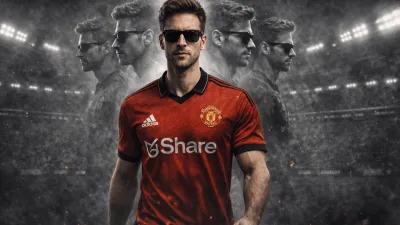
Ultra-realistic cinematic sports portrait of a confident young man walking forward inside a football stadium.
He is wearing a red Manchester United football jersey featuring a black collar, Adidas shoulder stripes, the club logo, and the KShare sponsor clearly visible.
The subject has natural wavy hair, an athletic and muscular physique, strong masculine jawline, and a serious, intense facial expression.
He is wearing sleek black sunglasses, enhancing a bold and confident sports-icon look.

The main subject is in full color, while the background is dramatic black-and-white.
Behind him, multiple faded and semi-transparent side-profile portraits of the same man are layered artistically, creating depth and motion.
The atmosphere is smoky and textured with subtle dust particles and fiery embers floating in the air.

Faintly glowing stadium floodlights appear in the background, combined with volumetric fog for a powerful cinematic mood.
Dark, gritty color grading with high contrast, sharp focus, ultra-detailed skin texture, and realistic fabric wrinkles.
Shallow depth of field, professional sports poster composition, symmetrical layout, bold framing.

Photorealistic, hyper-detailed, epic sports magazine cover style, dramatic lighting, 8K resolution, 4:5 aspect ratio.
Use the provided reference image strictly for facial resemblance and general appearance only.

In the world of modern digital art and AI-generated imagery, cinematic sports portraits have become one of the most powerful visual storytelling tools. These images are not just photographs; they are emotions frozen in time. They represent confidence, ambition, struggle, and victory—all wrapped into a single dramatic frame.
This article explores a highly detailed cinematic football portrait concept featuring a confident young man in a professional stadium environment. The image style is inspired by elite sports magazine covers, dramatic movie posters, and high-end editorial photography.
We will break down every creative decision—from lighting and composition to symbolism and emotional impact—so you can fully understand how and why this type of image works so effectively.
The Rise of Cinematic Sports Portraits
Sports photography has evolved far beyond action shots. Today’s audience wants storytelling. A cinematic sports portrait captures the psychological intensity of an athlete rather than just physical movement.
This style borrows techniques from cinema: dramatic lighting, controlled color palettes, intentional framing, and emotional depth. The result is an image that feels epic, powerful, and timeless.
With AI image generation tools becoming more advanced, creators now have the ability to design these portraits with surgical precision—defining mood, posture, facial expression, and even atmospheric particles.
Visual Identity of the Subject
At the center of this composition is a confident young man walking forward with purpose. His posture immediately communicates dominance, ambition, and self-belief. The forward motion symbolizes progress and leadership.
The subject has natural wavy hair, an athletic and muscular physique, and a strong masculine jawline. These physical traits are not random—they are classic visual cues associated with strength and resilience.
His serious and intense expression suggests focus and determination, as if he is mentally preparing for a high-stakes moment before stepping onto the pitch.
The Power of the Football Jersey
The red football jersey plays a crucial role in the image’s identity. Red is a color associated with passion, aggression, energy, and power. It instantly commands attention.
The jersey design includes a black collar, Adidas stripes on the shoulders, the Manchester United logo, and the TeamViewer sponsor. These elements add authenticity and realism, grounding the cinematic visuals in real-world football culture.
Professional sports branding elevates the image from generic artwork to something that feels officially licensed and magazine-ready.
Color vs Black-and-White Contrast
One of the most striking creative decisions in this concept is the use of color contrast. The main subject appears in full color, while the background is rendered in black and white.
This technique immediately draws the viewer’s eye to the subject and reinforces his importance. It visually separates him from his surroundings, making him feel larger than life.
The monochrome background also enhances the gritty, dramatic mood while allowing lighting, smoke, and texture to stand out more clearly.
Layered Side-Profile Portraits
Behind the main subject, multiple faded side-profile portraits of the same man appear in a layered composition. This is a powerful storytelling device.
These ghost-like silhouettes can represent different moments in the athlete’s journey—past struggles, growth, inner conflict, or alternate paths.
The transparency and fading effect ensures they do not overpower the main figure, but instead act as subtle emotional echoes.
Atmosphere and Environmental Effects
The atmosphere is rich with smoky textures, dust particles, and faint fire embers floating through the air. These elements add motion and depth to a static image.
Volumetric fog softens the background while maintaining contrast, giving the image a cinematic haze commonly seen in high-budget films.
These details may seem small, but together they transform the image into a living scene rather than a flat portrait.
Lighting: The Soul of the Image
Lighting defines the emotional tone of this portrait. Faintly glowing stadium floodlights in the background hint at a massive arena without overpowering the subject.
The main lighting is dramatic and directional, sculpting the face and body to emphasize muscle definition, facial structure, and fabric texture.
High contrast lighting creates sharp highlights and deep shadows, reinforcing the gritty and intense atmosphere.
Fabric and Skin Realism
Ultra-detailed skin texture and realistic fabric wrinkles are essential for photorealism. These details make the image believable at close inspection.
The jersey folds naturally around the body, responding to movement and posture. Skin pores, subtle imperfections, and natural shading prevent the subject from looking artificial.
This level of detail is especially important for 8K resolution images designed for large displays or print media.
Composition and Layout
The image follows a symmetrical layout, placing the subject centrally to convey balance and authority. Symmetry naturally feels powerful and controlled.
A shallow depth of field separates the subject from the background, ensuring visual clarity and focus.
The 4:5 aspect ratio is ideal for magazine covers, social media platforms, and promotional posters, making the image versatile across formats.
Professional Sports Magazine Aesthetic
This portrait style is heavily inspired by elite sports magazine covers. Everything—from pose and lighting to color grading—is designed to feel editorial.
The image looks like it could headline a feature story about an emerging football star, leadership, or personal triumph.
This makes it perfect for marketing, branding, and storytelling purposes.
Use of Reference Images
Reference images are used strictly for facial resemblance and general appearance. This ensures consistency without copying exact poses or expressions.
Using references responsibly helps maintain originality while achieving realism.
Why This Style Works So Well
This cinematic sports portrait succeeds because it blends realism with symbolism. It feels authentic yet emotionally elevated.
It tells a story without words—about confidence, ambition, and inner strength.
Whether used for branding, digital art, or creative exploration, this style leaves a lasting impression.
Final Thoughts
Ultra-realistic cinematic sports portraits represent the future of visual storytelling. By carefully controlling lighting, composition, mood, and detail, creators can produce images that rival professional photography and film stills.
This particular concept—featuring a confident football figure in a dramatic stadium environment—perfectly demonstrates how technical precision and emotional storytelling can coexist.
When executed correctly, such images do more than look impressive—they inspire.
Frequently Asked Questions (FAQs) about Ultra-Realistic Cinematic Football Portrait Guide | Epic Sports Poster Style
Did you find this helpful?
Show your support! Your feedback helps us create more amazing content.