Ultra Realistic Image Prompt: 150+ Photorealistic AI Prompts Guide
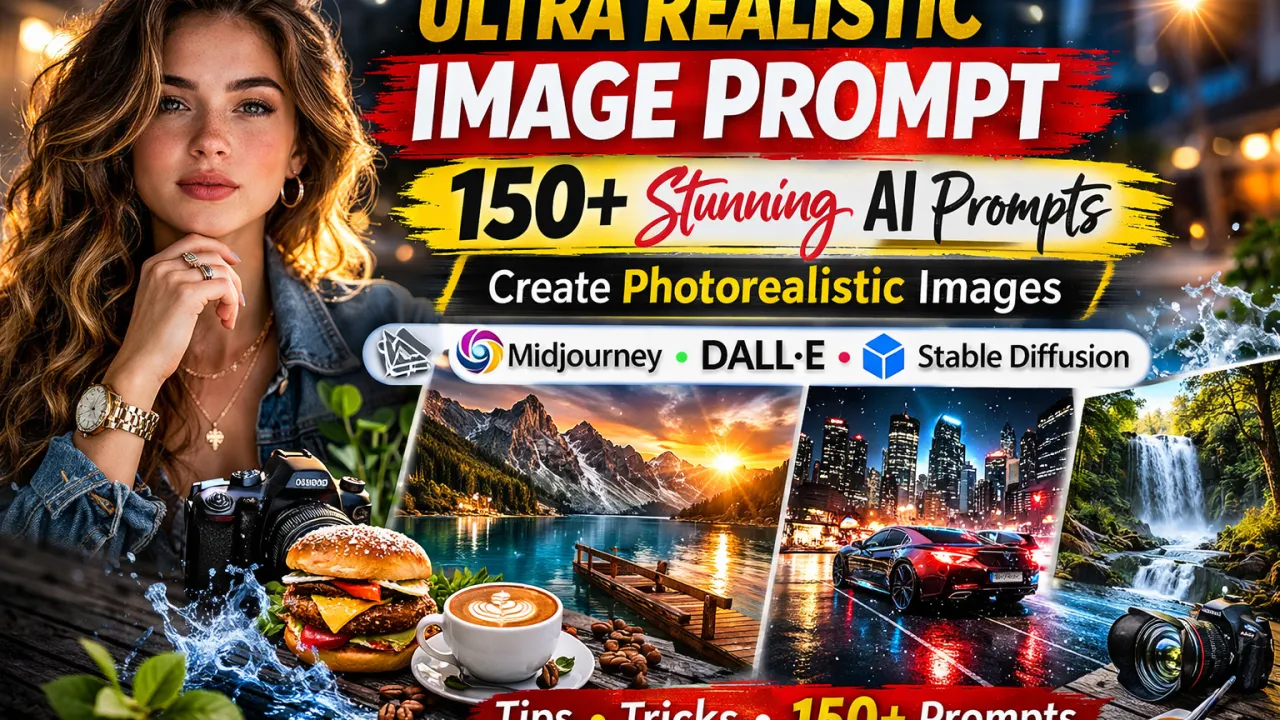
Ever tried to create visuals so lifelike they almost breathe? That’s exactly what this guide is about. In this post, we’re diving headfirst into the world of ultra realistic image prompt—what it means, how it works, and how you can craft prompts that produce jaw-dropping, photorealistic results using AI tools. Whether you’re a designer, marketer, content creator, or just someone curious about AI magic, you’ll discover actionable techniques, insider tricks, and over 150 ready-to-use prompts. Our main focus keyword, ultra realistic image prompt, will be explored in depth—helping you rank better, create smarter, and generate visuals that truly stand out.
What is an Ultra Realistic Image Prompt?
Alright, let’s break it down—no fluff, no jargon overload. An ultra realistic image prompt is a carefully crafted text instruction designed to generate images that look as close to real life as possible using AI tools like Midjourney, DALL·E, or Stable Diffusion.
Instead of vague inputs like “a dog,” you go full cinematic mode:
- Lighting conditions
- Camera angles
- Lens type
- Textures and materials
- Environment details
- Emotion and mood
Think of it like directing a movie scene—but with words.
Why Ultra Realistic Image Prompts Matter?
Now, you might be wondering—why all the fuss? Why not just type something simple and call it a day?
Because Details = Results
- Higher realism = more engagement
- Better visuals = stronger brand identity
- Detailed prompts = precise AI outputs
- Professional-quality images without expensive shoots
In a nutshell, the more effort you put into your prompt, the more stunning the output becomes.
Key Elements of an Ultra Realistic Image Prompt
1. Subject Description
Who or what is in the image?
2. Environment & Setting
Where is it happening?
3. Lighting
Natural light? Studio lighting? Golden hour?
4. Camera Details
- Lens (50mm, 85mm)
- Aperture (f/1.8, f/2.8)
- Depth of field
5. Texture & Detail
Skin pores, fabric threads, reflections—this is where realism explodes.
6. Style & Mood
Cinematic? Moody? Bright and cheerful?
How to Write a Powerful Ultra Realistic Image Prompt?
Step-by-Step Formula
- Start with the subject
- Add environment
- Include lighting
- Specify camera settings
- Add textures and realism cues
- Finish with mood or tone
Example:
“Ultra realistic portrait of a young woman, golden hour lighting, soft shadows, 85mm lens, shallow depth of field, detailed skin texture, cinematic tone”150+ Ultra Realistic Image Prompts Collection
Portrait Ultra Realistic Image Prompts
Description: These prompts focus on human expressions, facial details, and lifelike skin textures.
- Ultra realistic portrait of an old man with wrinkles, natural lighting, 85mm lens
- Close-up ultra realistic face with freckles and glowing skin
- Ultra realistic image of a smiling child in soft daylight
- Portrait of a woman with wet hair, cinematic lighting
- Ultra detailed face with realistic pores and shadows
- Realistic fashion model in studio lighting
- Ultra realistic businessman portrait with sharp suit texture
- Teenager laughing candidly, natural sunlight
- Ultra realistic female face with makeup details
- Man with beard, hyper detailed hair texture
- Realistic athlete sweating after workout
- Old woman knitting near window light
- Ultra realistic eyes close-up reflection visible
- Sad expression portrait, moody lighting
- Portrait with rim lighting effect
Nature Ultra Realistic Image Prompts
Description: Capture the beauty of nature with lifelike detail and lighting.
- Ultra realistic forest with sunlight rays through trees
- Mountain landscape with snow texture and fog
- Realistic waterfall with mist and reflections
- Sunset beach with detailed waves
- Ultra realistic jungle scene with animals hidden
- Macro leaf with water droplets
- Snow-covered forest in winter morning
- Desert dunes with golden lighting
- Ultra realistic river flowing through rocks
- Rainy forest with fog and moisture
Urban & City Ultra Realistic Image Prompts
Description: Modern city life, architecture, and street scenes.
- Ultra realistic city skyline at night with lights
- Rainy street with reflections on road
- Busy market with detailed crowd
- Cyberpunk city with neon lights
- Urban alley with graffiti textures
- Ultra realistic metro station scene
- Skyscraper glass reflection in daylight
- Street photography candid moment
- Night traffic with light trails
- City rooftop sunset scene
Food Ultra Realistic Image Prompts
Description: Delicious, mouth-watering food photography.
- Ultra realistic burger with melting cheese
- Fresh pizza with detailed toppings
- Macro shot of chocolate dripping
- Realistic fruit bowl with water droplets
- Street food close-up with steam
- Ultra realistic coffee cup with foam art
- Dessert with creamy texture detail
- Breakfast table with natural lighting
- Ice cream melting in sunlight
- Luxury dining plate presentation
Product Ultra Realistic Image Prompts
Description: Perfect for eCommerce and branding visuals.
- Ultra realistic smartphone with reflections
- Watch product with metallic shine
- Perfume bottle with glass texture
- Luxury car interior detailed
- Sneakers close-up with fabric texture
- Laptop on desk with soft lighting
- Headphones with realistic shadows
- Cosmetic product with water splash
- Jewelry with sparkling reflections
- Gaming setup with RGB lighting
Fantasy Ultra Realistic Image Prompts
Description: Unreal worlds—but rendered with real-world detail.
- Ultra realistic dragon flying over mountains
- Fantasy castle with fog and lighting
- Warrior with armor texture details
- Magical forest glowing elements
- Elf character ultra realistic portrait
- Fire and ice battle scene
- Mythical creature with skin detail
- Wizard casting spell cinematic lighting
- Dragon eye macro ultra realistic
- Floating islands with shadows
Animals Ultra Realistic Image Prompts
Description: Fur, feathers, and lifelike animal details.
- Ultra realistic lion close-up with mane detail
- Dog portrait with wet nose texture
- Cat eyes macro shot
- Horse running in dust realistic motion
- Bird feathers ultra detailed
- Tiger in jungle with sunlight rays
- Elephant skin texture realistic
- Wolf howling under moonlight
- Fish underwater detailed scales
- Butterfly wings macro detail
Additional Ultra Realistic Image Prompts (100+ Continued)
Description: A mix of creative, cinematic, and commercial prompts.
- Ultra realistic rain droplets on glass
- Fire flames with detailed texture
- Smoke effect cinematic lighting
- Space astronaut realistic suit
- Moon surface detailed
- Vintage camera realistic shot
- Office workspace ultra realistic
- Library interior lighting detail
- Hotel room luxury design
- Realistic gym workout scene
- Yoga pose sunrise beach
- Wedding couple cinematic photo
- Baby sleeping soft lighting
- Fashion runway scene realistic
- Close-up hands texture detail
- Rainy window portrait reflection
- Street vendor realistic scene
- Night sky stars ultra clear
- Galaxy realistic rendering
- Water splash frozen moment
- Glass breaking slow motion
- Neon sign realistic glow
- Fireworks ultra realistic sky
- Camping scene with fire
- Mountain hiking realistic shot
- Snowfall cinematic lighting
- Sunrise golden light realistic
- Ocean wave crash detailed
- Bridge architecture realistic
- Airport terminal scene
- Train station realism
- Bus interior realistic
- Office meeting scene
- Startup workspace realistic
- Freelancer desk setup
- Gaming chair setup
- Keyboard RGB close-up
- Smartwatch realistic UI
- Drone flying sky detail
- Camera lens macro detail
- Minimalist room realistic
- Luxury villa interior
- Swimming pool reflection
- Beach umbrella realistic
- Sand texture macro
- Footprints in sand detail
- Rain puddle reflection city
- Vintage car realistic detail
- Motorbike speed realism
- Traffic jam realistic
- School classroom detail
- Teacher teaching realistic
- Students studying scene
- Hospital room realism
- Doctor patient interaction
- Medical tools macro detail
- Fitness trainer realistic
- Boxing ring cinematic
- Football match action
- Cricket stadium realism
- Basketball dunk slow motion
- Swimming pool action
- Cycling road realistic
- Running athlete detail
- Mountain biking scene
- Fishing lake morning mist
- Boat sailing sunset
- Harbor ships realistic
- Industrial factory realism
- Construction site detail
- Engineer working scene
- Architect blueprint realistic
- Designer workspace setup
- Artist painting realism
- Musician studio realistic
- Guitar texture macro
- Piano keys detail
- Concert stage lighting
- DJ setup realistic
- Nightclub scene lighting
- Bar interior realistic
- Cafe environment cozy
- Street coffee shop
- Bakery shop realism
- Supermarket aisle detail
- Shopping mall realism
- Fashion store display
- Luxury showroom scene
- Tech store product display
- Mobile shop realism
- Electronics showcase realistic
- Warehouse storage detail
- Delivery logistics scene
- Packaging product realism
- Courier delivery action
- Drone delivery scene
- Future city realistic
- AI robot ultra realistic
- Human robot interaction
- Smart home interior
- Augmented reality scene
- Virtual reality headset user
- Futuristic office setup
Best Tips to Improve Ultra Realistic Image Prompt
- Use camera terms (DSLR, lens, aperture)
- Add lighting styles (soft, harsh, natural)
- Include textures (wet, rough, glossy)
- Be specific, not generic
- Experiment and refine
FAQs About Ultra Realistic Image Prompt
What is an ultra realistic image prompt?
An ultra realistic image prompt is a detailed text instruction given to an AI tool to generate images that closely resemble real-life photography. It includes elements like lighting, camera settings, textures, environment, and mood to achieve lifelike results.
How does AI generate realistic images?
AI models are trained on massive datasets of images and learn patterns such as lighting, shadows, textures, and composition. When you input a prompt, the AI interprets those instructions and recreates a new image based on learned visual patterns—almost like a digital artist working from memory.
Which tools support ultra realistic prompts?
Popular AI tools that support ultra realistic prompts include Midjourney, DALL·E, Stable Diffusion, Leonardo AI, and Adobe Firefly. Each tool has its own strengths, but all can produce highly realistic images when given detailed prompts.
Can beginners create realistic images?
Absolutely! You don’t need to be an expert. Beginners can start with simple prompts and gradually add details like lighting and camera settings. With a bit of practice and experimentation, anyone can create stunning realistic visuals.
What makes a prompt more effective?
An effective prompt is specific, descriptive, and structured. Including details like subject, environment, lighting, camera lens, textures, and mood helps the AI understand exactly what you want, leading to better results.
Does lighting affect realism?
Yes, lighting plays a huge role in realism. Natural lighting, golden hour tones, soft shadows, and reflections can dramatically enhance how real an image looks. Poor or vague lighting often leads to flat or artificial results.
How important are camera settings?
Camera settings like lens type (e.g., 50mm, 85mm), aperture (f/1.8), and depth of field help mimic real photography. These details guide the AI in producing images that feel like they were captured with an actual camera.
Can I use these prompts commercially?
In most cases, yes—but it depends on the AI tool’s licensing terms. Platforms like Midjourney and DALL·E allow commercial use under certain conditions, so always check their latest policies before using images for business purposes.
Are ultra realistic prompts SEO-friendly?
Indirectly, yes. While prompts themselves don’t impact SEO, the images generated can improve engagement, reduce bounce rates, and enhance user experience—factors that positively influence SEO performance.
What is the best length for prompts?
There’s no fixed length, but generally, detailed prompts (20–50 words) perform better. Too short can be vague, while too long can confuse the AI. The key is clarity and relevance.
How to improve image sharpness in AI?
You can improve sharpness by adding terms like “ultra detailed,” “8K resolution,” “sharp focus,” and “high-definition textures.” Also, specifying good lighting and camera settings helps enhance clarity.
Do prompts work the same on all AI tools?
No, each AI tool interprets prompts differently. A prompt that works perfectly on Midjourney might need adjustments for Stable Diffusion or DALL·E. It’s always a good idea to tweak prompts based on the platform.
Can I reuse prompts?
Yes, you can reuse prompts, but slight modifications often yield better results. Changing lighting, angles, or styles can create fresh variations from the same base prompt.
How to avoid blurry results?
To avoid blurry images, include terms like “sharp focus,” “high resolution,” and “detailed textures.” Also, avoid overly complex or conflicting instructions in a single prompt.
What are common mistakes in prompts?
Common mistakes include being too vague, overloading the prompt with conflicting details, ignoring lighting, and not specifying realism cues like textures or camera settings. These can lead to poor-quality outputs.
Is ultra realism always better?
Not necessarily. While ultra realism is great for certain use cases like product design or photography, sometimes stylized or artistic images are more effective depending on the goal. It all comes down to your creative intent.
Conclusion
So, there you have it—your ultimate guide to mastering the ultra realistic image prompt. From understanding the basics to crafting detailed, high-performing prompts and exploring 150+ examples, you’re now equipped to create visuals that don’t just look good—they feel real.
At the end of the day, it’s all about experimentation. Tweak your words, play with lighting, test different styles—and before you know it, you’ll be generating images that could easily pass for real photography. Pretty wild, right?
Now go on—start creating, keep refining, and let your imagination run absolutely wild.
Frequently Asked Questions (FAQs) about Ultra Realistic Image Prompt: 150+ Photorealistic AI Prompts Guide
Did you find this helpful?
Show your support! Your feedback helps us create more amazing content.